.png?width=100&height=100&name=Untitled%20design%20(50).png)
.png)
Less variation, less rework and more plants ready for sale.
When plants from the same batch develop at different rates, the impact goes beyond appearance. For production nurseries, improving crop uniformity can reduce unnecessary handling, improve scheduling and increase the proportion of plants ready for sale.
A batch of plants may start with the same cultivar, potting date and growing conditions, yet several months later, some are ready for dispatch while others need another prune, additional growing time or corrective attention.
For nurseries producing thousands of plants, these differences can quickly add up. Uneven crops require additional grading, complicate order fulfilment and occupy valuable growing space for longer than planned.
The challenge is not simply producing identical plants. It is achieving consistent quality and sale readiness across a crop while making efficient use of labour, water, fertiliser and space.
Where does variation begin?
Crop uniformity starts well before plants reach their final growing area.
Differences in cutting maturity, seedling vigour, root development and propagation conditions can create variation that continues throughout production.
When plants at different stages of development are potted and managed together, those differences may become more pronounced.
Assessing propagation material before potting, grouping plants at similar developmental stages and maintaining accurate batch records can help prevent early inconsistencies from becoming larger production problems.
Are your growing conditions as uniform as you think?
Even when plants receive the same irrigation and fertiliser program, they may not experience the same growing conditions.
Irrigation distribution is a common example. Differences in sprinkler performance, pressure, spacing or blocked emitters can result in some containers receiving considerably more water than others.
The nursery industry's best management practice guidance recommends an irrigation Coefficient of Uniformity of at least 85% for appropriate overhead systems.
Regular catch can testing can help identify uneven water distribution before it affects crop development.
Growing media consistency is equally important. Differences in moisture retention, wettability, pH and electrical conductivity can influence root development and nutrient availability.
When sections of a crop are falling behind, increasing fertiliser may not address the underlying problem. Checking irrigation performance, growing media and root health first can help identify the actual cause.
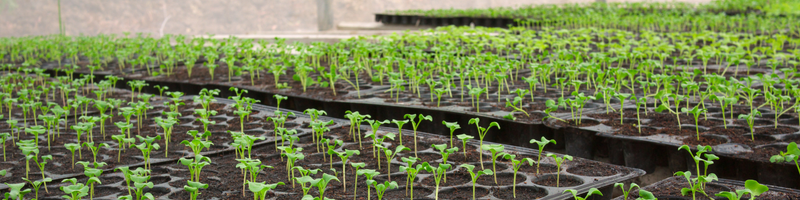
Consistency comes from systems, not just growing conditions
As production volumes increase, consistency in day to day operations becomes increasingly important.
Different pruning techniques, inconsistent spacing schedules or variations in potting practices can all influence the finished product.
At Harts Nursery, the introduction of mechanical pruning helped produce more uniform plant size and shape, reducing rework and grading requirements while improving production efficiency.
While mechanisation will not suit every crop or business, the underlying principle applies broadly. Standardising routine practices can help reduce unnecessary variation.
Clear crop specifications, consistent staff procedures and regular inspections make it easier to maintain quality as production expands.
Measure what is ready for sale
Crop uniformity should ultimately be assessed against market requirements.
A crop may appear healthy overall, but if only part of the batch meets customer specifications by the planned dispatch date, there is still an opportunity to improve production performance.
Useful measures include the percentage of plants meeting sale specifications on schedule, additional pruning or grading required, and the number of plants needing extended growing time.
Regular monitoring also provides opportunities to identify uneven growth early and separate plants requiring different management before the entire batch is affected.
Small improvements can deliver meaningful results
Improving uniformity does not necessarily require new equipment or major investment.
It may begin with checking irrigation performance, reviewing propagation grading, improving potting consistency or introducing clearer production records.
For growers looking to improve efficiency, a useful starting point is to identify one crop that regularly requires additional handling or finishes unevenly. Investigate where the variation begins, make a targeted change and monitor the results.
The goal is not perfect uniformity. It is producing more plants that meet customer expectations, at the right quality and at the right time, with fewer resources spent correcting avoidable inconsistencies.