.png?width=100&height=100&name=Untitled%20design%20(50).png)
.png)
The Challenge of Foot Traffic in Regional Garden Centres — and How to Solve It
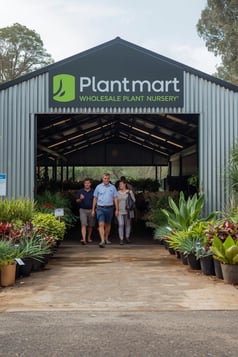
The role of the regional garden centre therefore shifts from being simply a place to purchase plants to becoming a place people actively want to visit.
Four strategies consistently help regional garden centres increase visitation:
• Creating destination experiences
• Building strong community connections
• Improving digital visibility
• Designing merchandising that encourages exploration
Together, these elements can transform foot traffic from an unpredictable challenge into a manageable and repeatable outcome.
|
Turning the Garden Centre into a True Destination Regional garden centres that consistently attract customers tend to position themselves as destinations rather than simply stores. This means creating reasons for people to visit beyond purchasing a plant. Experiential retail is a key driver of visitation. Research from the University of Queensland’s School of Business has shown that retail environments offering educational and experiential elements increase both dwell time and purchase likelihood. In the garden centre context this can include: • Seasonal planting demonstrations • Free weekend workshops • Garden problem solving clinics • Kids gardening activities during school holidays • Local grower meet-the-producer days |
|
.png?width=316&height=473&name=Foot%20Traffic%20in%20Regional%20Garden%20Centres%20-%20BLOG%20IMAGES%20(1).png)
|
|
These experiences not only bring customers through the door but also reinforce the expertise and credibility of the business while increasing the time customers spend on site. |
.png?width=236&height=236&name=Foot%20Traffic%20in%20Regional%20Garden%20Centres%20-%20BLOG%20IMAGES%20(2).png)
Community Connection Drives Loyalty and Repeat Visits
While destination experiences encourage initial visits, long-term success often depends on something even more powerful: community connection.
Regional businesses thrive when they embed themselves within the local community. Garden centres that collaborate with local organisations often experience stronger and more consistent visitation.
Partnerships with schools, community gardens, gardening clubs and local councils can create new pathways for customers to discover the business. Hosting school groups, supporting local garden competitions or partnering with landscapers for educational events can position the garden centre as an important part of the region’s gardening culture.
According to research from the Australian Retailers Association, local engagement significantly improves customer loyalty in regional retail environments because customers prefer supporting businesses that actively contribute to the community.
Why Digital Visibility Drives Physical Visits
While foot traffic happens in physical space, the decision to visit often begins online. Increasingly, customers search for inspiration or gardening advice before deciding where to shop.
Strong digital visibility can directly influence visitation.
Key strategies include:
Google Business Optimisation
Accurate opening hours, regular photo updates and customer reviews increase the likelihood that a garden centre appears in local search results. Many visits begin with simple location-based searches such as “garden centre near me.” Keeping Google Business profiles complete, current and regularly updated helps ensure the business appears when these searches occur.
Educational content
Short videos, plant care tips and seasonal advice shared on social media build trust and position the garden centre as a reliable knowledge source.
Event promotion
Promoting workshops and special events online encourages people to plan a visit rather than waiting until they need a plant.
Research from the Australian National University’s Centre for Social Research also highlights that regional consumers frequently rely on Google and social media to discover local experiences.
.png?width=300&height=449&name=Foot%20Traffic%20in%20Regional%20Garden%20Centres%20-%20BLOG%20IMAGES%20(3).png)
|
Merchandising that Encourages Discovery Once customers arrive, the layout and presentation of the garden centre play a critical role in encouraging exploration. Effective merchandising not only improves the shopping experience but can also increase both dwell time and average transaction value. Successful garden centres often group products into complete solutions rather than individual items. For example: • A drought-tolerant garden display with plants, mulch and irrigation options • Indoor plant styling displays with pots and accessories Behavioural research from the University of Melbourne has shown that solution-based merchandising reduces decision fatigue and increases purchasing confidence. By helping customers visualise how plants and products work together, garden centres can make purchasing decisions easier and more inspiring. |
Seasonal Programming Keeps Customers Returning
Another strategy used by high-performing regional garden centres is structured seasonal programming.
Rather than relying solely on peak periods such as spring, they create smaller campaigns throughout the year that encourage regular visitation.
Examples include:
• Autumn vegetable planting weekends
• Winter indoor plant festivals
• Spring garden preparation workshops
• Summer heat-resilient plant displays
• School holiday gardening workshops for children
• Mother’s Day and Father’s Day plant gift workshops
School holiday activities can be particularly effective for attracting families, while gift-focused workshops around occasions such as Mother’s Day and Father’s Day create additional reasons for customers to visit.
By planning events and campaigns across the calendar, the garden centre maintains momentum and gives customers multiple reasons to return throughout the year.
The Opportunity for Regional Garden Centres
Regional garden centres often underestimate their greatest advantage: authenticity and expertise.
Customers increasingly seek genuine experiences, trusted advice and meaningful connection with local businesses.
By focusing on destination experiences, community engagement, strong digital visibility and thoughtful merchandising, regional garden centres can transform foot traffic from an unpredictable challenge into a repeatable outcome.
In many retail sectors, the physical store is becoming less relevant.
For garden centres, the opposite is true.
The experience is the advantage.
.png?width=1020&height=510&name=Foot%20Traffic%20in%20Regional%20Garden%20Centres%20-%20BLOG%20IMAGES%20(4).png)